
Beware Of The Dogs
Posted: 19/05/2015 Filed under: Corporate, Personal | Tags: Service, Time 2 CommentsIt’s sunny today, when they predicted rain. That’s always a good start to my day. You join me on my constitutional walk across Greenham Common (imagine hills, horses, cows and sheep right next to a large town, and you can draw the picture). Coming over the brow of the hill near home, there’s a farm. And on that farm (no singing “Old MacDonald” at this point) there are guard dogs. Every day I pass the farm, the dogs bark at me. And they are very loud.
But that’s not what makes me laugh. It’s the fact that I am at least 50 yards past them, before they bark and snarl. They have to be the world’s worst guard dogs. And I think poor service is like these guard dogs. Let me explain.
I have many real and recent examples of poor service. It’s usually when someone takes ages to acknowledge that I need help, and then barks at me when they open their mouth. Here are those examples:
- the mobile phone shop where someone eventually wandered over, and then said they couldn’t help with anything to do with my existing phone (I’d have to call customer services). Shame I wanted to fix one device, and then take out a contract for another! We didn’t get that far.
- the car dealer that was texting while I looked around the showroom, and then asked whether I was ready to buy a car today (as his first question).
- the hotel receptionist that barely looked up as she gestured me vaguely in the direction of the bar, and said I need to speak to “someone in front-of-house” (I know what that means, but it’s hospitality industry jargon).
We know instinctively that great customer service is key to acquiring and retaining customers. But how well do we understand how value is judged, in those very first interactions? Simply put, it’s The 7 – 11 Rule where, in the first seven seconds of contact, a person (in this example the customer) forms 11 impressions about you and your organisation – including honesty, professionalism and helpfulness. So beware of the dogs. They make poor impressions. Don’t hire them. Fire them. Better to lose them than your customers.
So, who is providing great service? I’m so impressed by @DecathlonUK in Reading. Go and watch how they handle those first interactions with customers. Knowledgeable. Helpful. Professional. And if Grace is around, watch how she works. Such a natural customer service style. Simple stuff, but so #standout.
The True Meaning Of Success
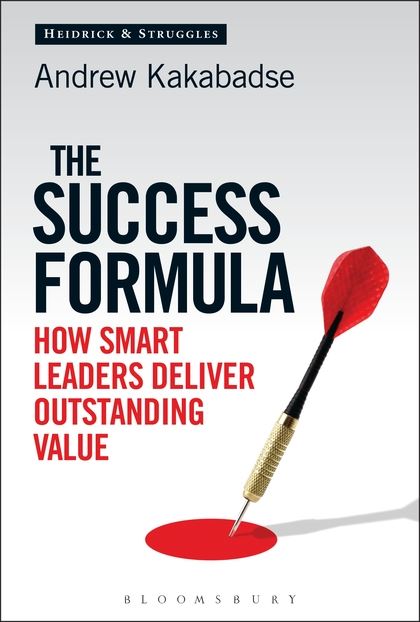
Posted: 11/05/2015 Filed under: Corporate, Personal | Tags: Board, Leadership, Results, Success, Value Leave a commentMy colleague Andrew Kakabadse @Kakabadse has published a new book. In his research, supported by the global search firm Heidrick & Struggles, he found that:
“the starting point for any successful organisation, or any individual, must be value. Always. Value is the currency of success. The types of value organisations seek to create, and how they approach doing so lies at the very core of any understanding of what success looks like and what is required to make it a reality”
He also talks about how different types of organisations seek to create different sorts of value – whether it is shareholder value, social value, stakeholder value, or financial value. But all organisations must create value to legitimise their existence and be regarded by themselves and others as successful. He (rightly) states that creating value therefore is the primary purpose of leadership, and the building block of every success story that adorns annual reports, magazine covers and more.
Andrew Kakabadse’s latest book – ‘The Success Formula’ is available to order now from Bloomsbury: http://www.bloomsbury.com/uk/the-success-formula-9781472916846/.
When Suppliers Value Their Customers
Posted: 10/05/2015 Filed under: Corporate | Tags: Customers, Innovation, Segmentation, Suppliers, Value Leave a commentYou’d think I’d be writing about when suppliers value and love their customers. But I’m thinking more literally than that. I’m talking about what happens when suppliers actually place a monetary value on the amount a customer could potentially spend with them (or how much a group of customers could spend on average). It’s usually called Customer Lifetime Value, or CLV. What happens?
We’ve seen this approach with banks and their wealth management divisions. They’ve segmented their customers by their assets or wealth (and therefore value to them). Segments include Ultra High Net Worth, High Net Worth and Mass Affluent. There are broadly three different types of segmentation. You can segment customers by:
- value, i.e. the amount of revenue or margin you can earn from those customers
- characteristics, i.e. the features of each customer (in this case including the source of someone’s wealth)
- behaviours i.e. their attitude to the service and how they use it (in wealth, they could be disinterested, self-directed, demanding etc)
When suppliers consider the features and characteristics of their customers, you often see this empathetic approach being reflected in the service provided. If they focus on behaviours, they can provide service that respects those customer wants and habits. And I’d argue that focusing purely on value leads to certain customer segments being ignored or marginalised. In a world where suppliers are competing fiercely for the best customers (people with “ultra high net worth” and “high net worth”), you can see what’s happening to those in the “mass affluent” segment. There are few suppliers willing to provide quality service, leading to customers self-directing their investment decisions (the DIY approach).
Now, I have some sympathy for banks on this point. The sheer weight of legislation, and the impact of the Retail Distribution Review (launched in June 2006 and still having a huge impact) has meant that suppliers can’t make enough profit with those less-wealthy segments, unless brilliant technology and slick interactions make their process efficient and service valuable.
What seems to be happening is that fewer people are getting good financial advice. This is a societal risk. If people fail to get advice, too many will make mistakes with their investments and pensions. They may, for example, take additional risk to try and bolster their shrinking pension pot. Mistakes mean loss and potential hardship. If hardship means relying on others for financial support, that’ll be a burden on all the central and local government services. So it’s down to reputable firms to find a way to service these customers, and still make money, before this situation becomes societal. That will require systematic innovation.
Now I’ve focused on wealth management, where arguably the effect of segmentation is most dramatic. But the same principles apply elsewhere. When I worked in risk, I was involved in a huge change programme led by a “big-four” consultancy. On the face of it, we segmented our customers using buying characteristics. We actually used only their “book value” i.e. their spend with us. We moved the least-valuable customers to a new division, set-up to service these customers in a different way. And we lost all but two of those customers within twelve months. That’s what happens when suppliers value their customers. Segmentation requires something more intuitive. Segmenting by value, characteristics and behaviours is a much more intelligent approach.
 MERITology